


Need Help?
Call an heating expert on 01282 429061

 PayPal Spread The CostKlarna, Clearpay or PayPal
 Free DeliveryOrders Over £500Excludes boilers and worktops
 Price Match PromiseWe won't be beaten on price
| Wood Species | Ash |
|---|---|
| Stave Construction | Standard Stave |
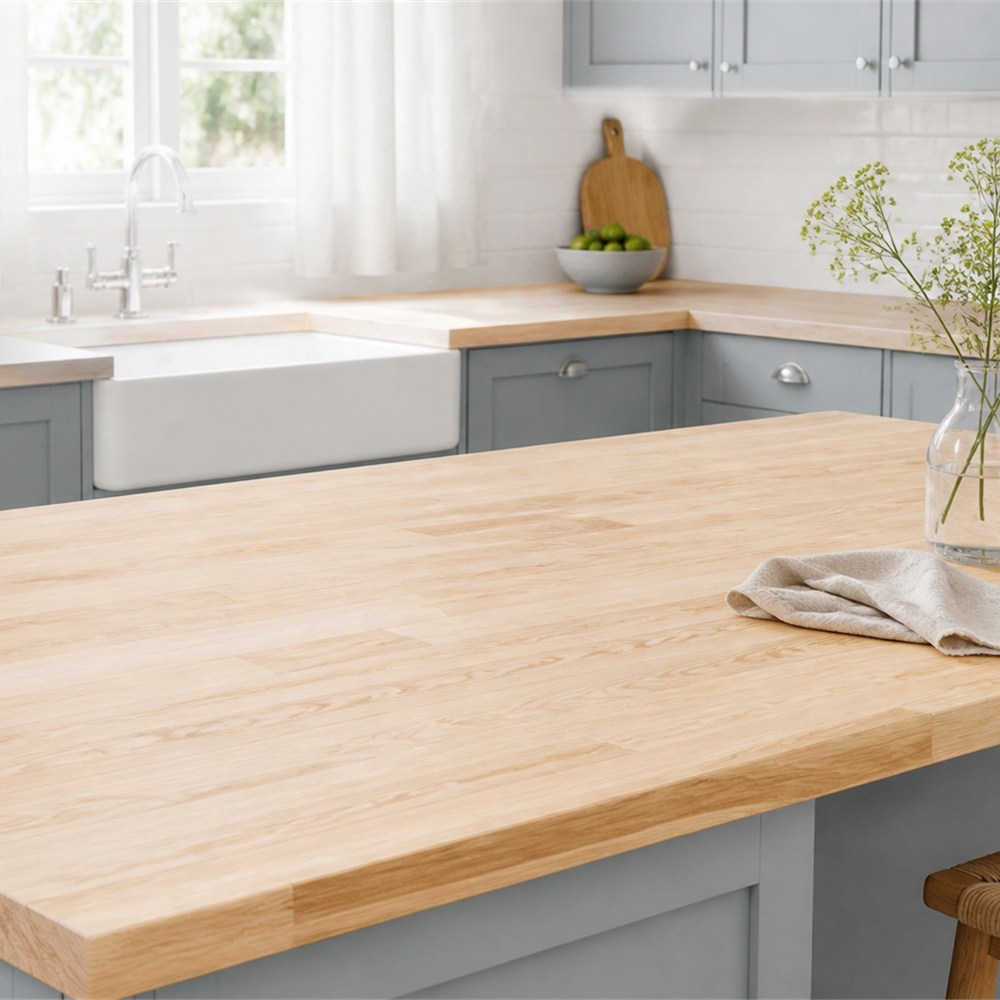
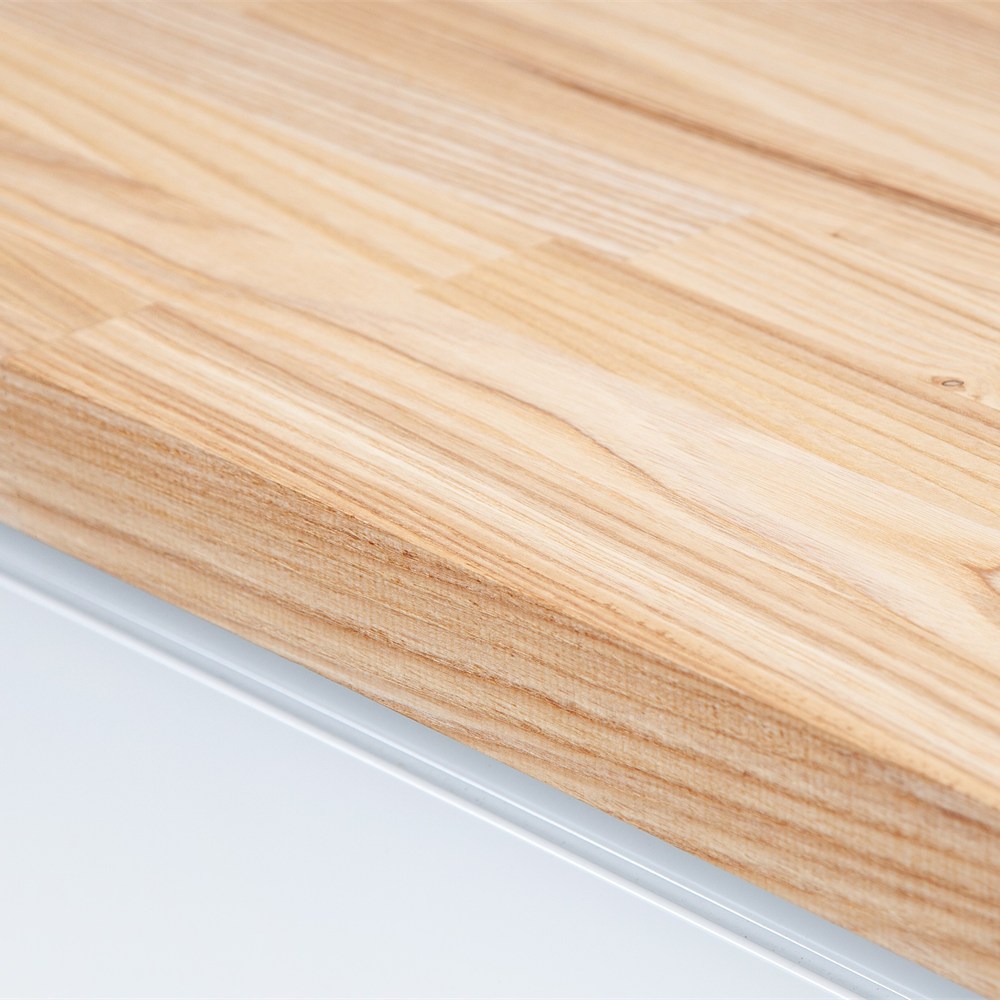
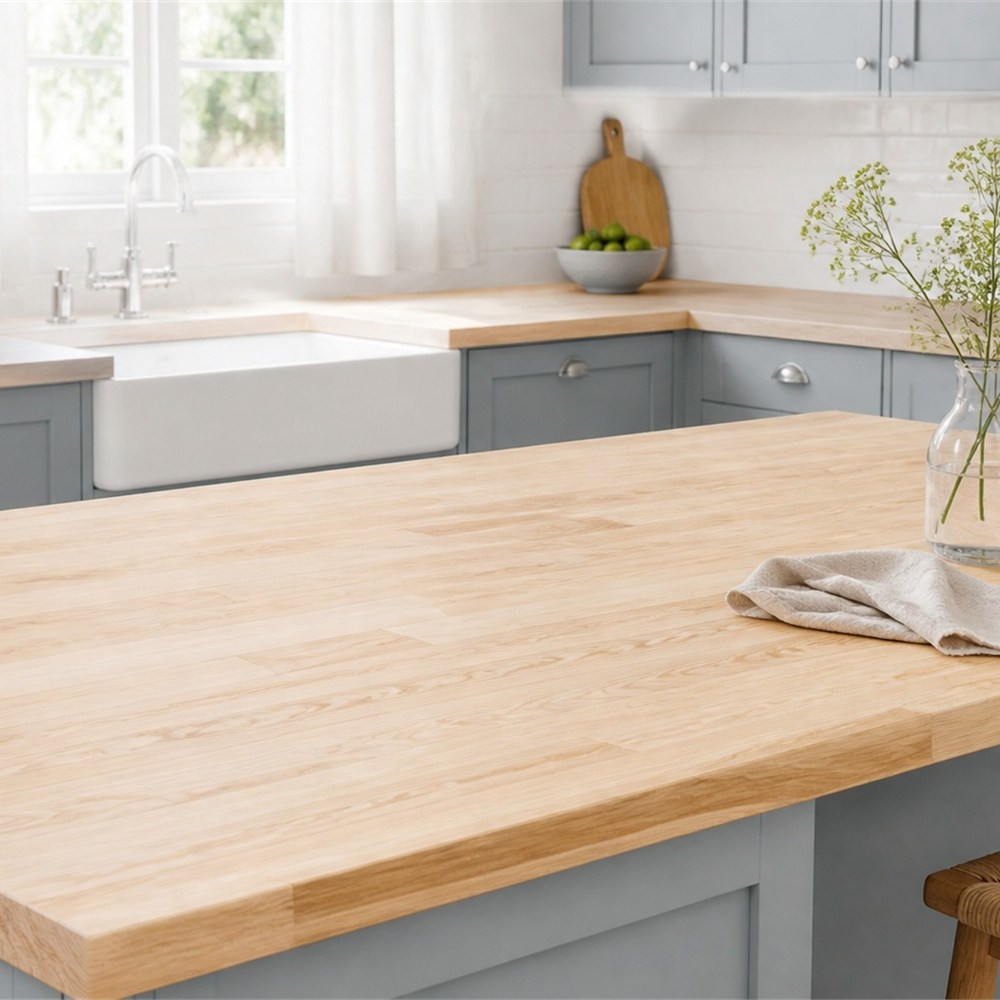
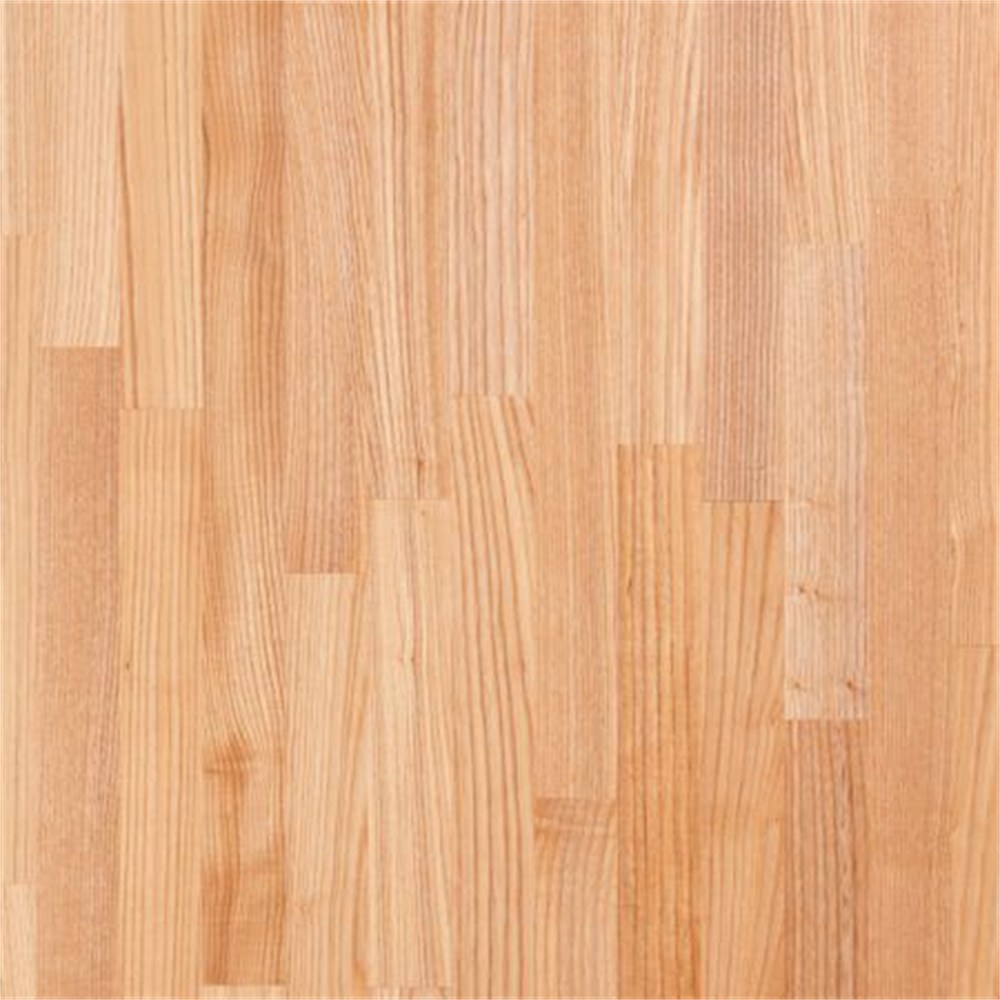
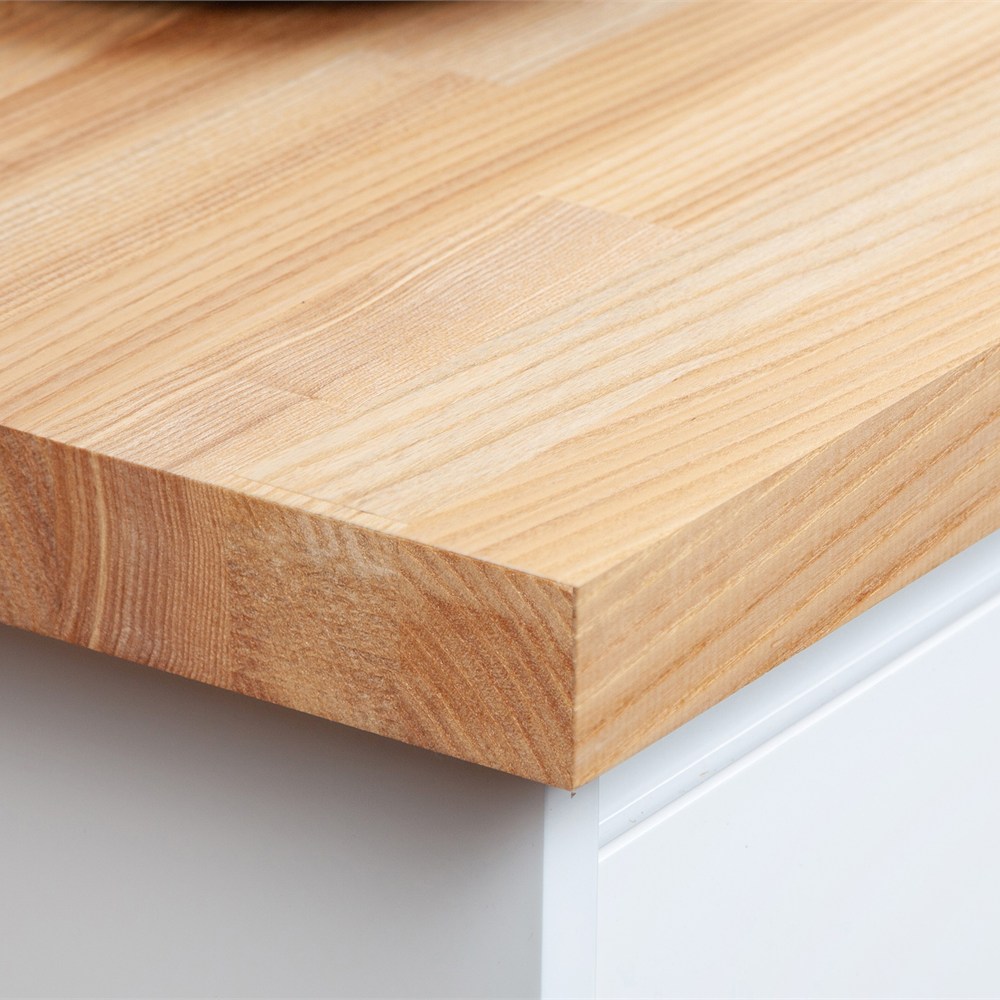
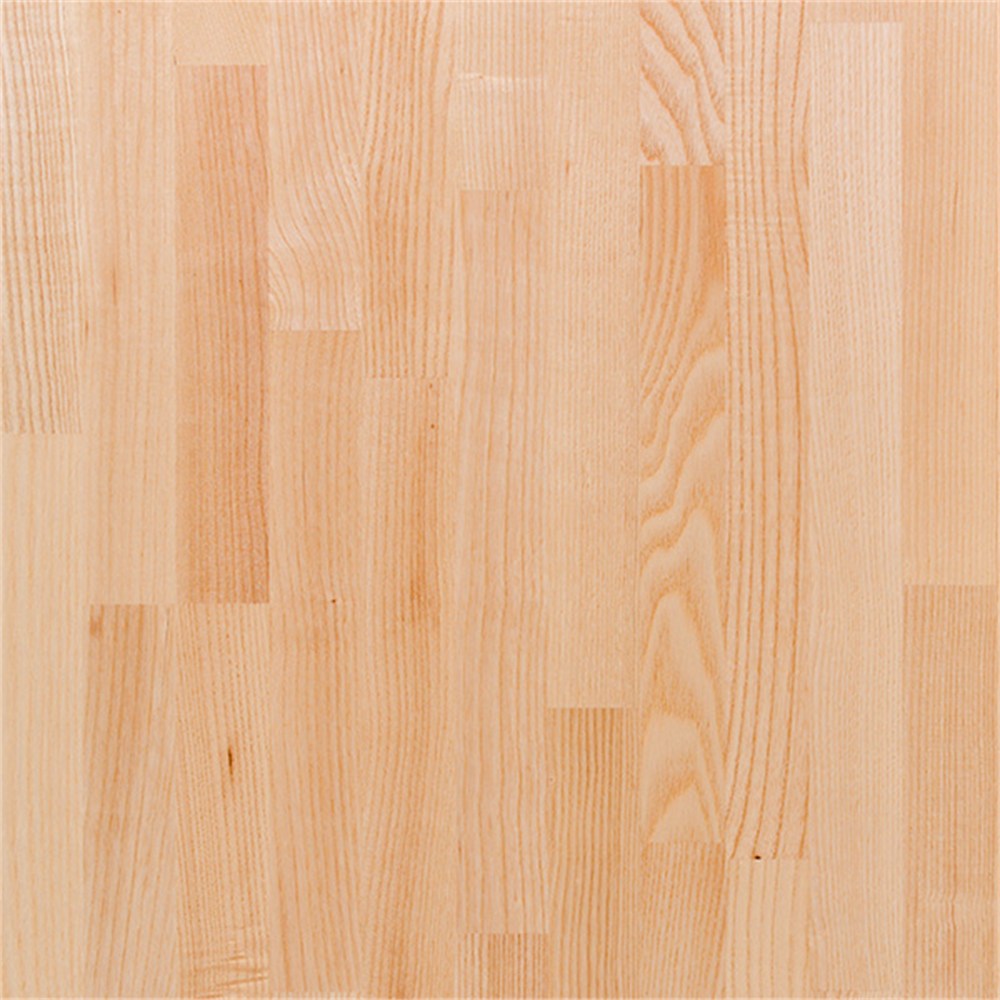
De Terra ash worktops bring the palest natural tone in our range - creamy blonde with a bold, athletic grain. It is the timber of Scandinavian interiors and tool handles alike: light on the eye, seriously tough underneath.
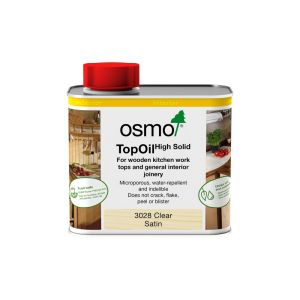
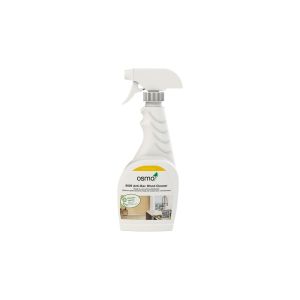
These worktops arrive sanded and unoiled. They must be oiled before they go in - every face, every cut edge and the underside, because a sealed edge is what keeps water out of the timber around a sink.
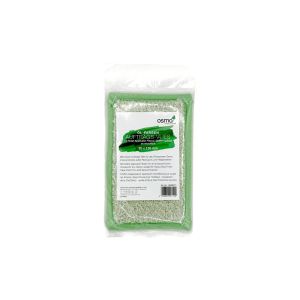
Allow two to three coats and one 500ml tin per 3m board, every face. Osmo TopOil from GBP 24. Full instructions: installation and aftercare guide.
Ash is the timber sports equipment and tool handles are made from - European ash runs around 1,320 lbf Janka, effectively oak-hard, with a springy resilience all its own. In a kitchen that translates to a pale, light-reflecting surface with a confident open grain that keeps rooms feeling airy where darker timbers close them in.
The range runs 40mm thickness at 635mm wide, lengths to 4m, plus 960mm-wide breakfast bars for islands and a matching upstand. Boards arrive sanded and un-oiled. For Scandi, coastal and small-but-bright kitchen schemes, ash is the range designers reach for first.
Keep it pale or warm it up - the oil decides
A clear or 'natural-effect' oil keeps ash close to its raw blonde tone; a standard Danish oil warms it to soft honey. Either way: 2-3 coats, every face and edge, before fitting.
| Material | Solid European ash (fraxinus excelsior) |
| Construction | Solid staves - 40mm nominal width (38-42mm range) |
| Hardness | Janka approx. 1,320 lbf (5,900 N) - the tool-handle hardwood |
| Thickness | 40mm |
| Edge Profile | Square edge |
| Surface | Sanded to 120 grit - supplied un-oiled |
| Widths | 635mm worktops - 960mm breakfast bars |
| Weight | 3.5 kg to 86 kg per board |
| Brand | De Terra |
| Delivery | GBP 30 two-man delivery to mainland UK, or free Click & Collect from Burnley |
2-3 coats before fitting, every face and edge. Choose your oil deliberately: clear/raw-effect preserves the blonde tone, standard Danish oil turns it gently honey. Test on the underside first.
Pale timber shows tea and wine sooner than dark - wipe spills promptly and keep the oil film honest. A well-oiled ash top shrugs; a neglected one records.
Standard timber rules: no standing water, extra attention at the sink, re-oil when beading stops. Ash behaves like oak around moisture - good, with discipline.
Trivets and boards. Ash's impact resilience does not extend to blades or 200-degree pans - no timber's does.
Sands and re-oils to new like the whole family. Its pale tone makes refreshed areas blend almost instantly - the easiest timber in the range to spot-repair invisibly.
Storage, oiling, expansion gaps, fixings, cut-outs, joints and everyday care, step by step: read the installation and aftercare guide.
Yes - European ash runs about 1,320 lbf on the Janka scale, essentially level with oak, and its natural resilience is why it is used for striking tools. It is the hardest pale timber commonly used for worktops.
All pale timbers warm slightly with age and oil. Using a clear/natural-effect hard wax oil minimises it; standard Danish oil accelerates it pleasantly toward honey. The choice of oil, not the ash, sets the ageing curve.
Scandi and Japandi schemes, coastal looks, small kitchens that need light, and any room with pale painted units. Matt black or brushed-steel hardware against ash is a designer staple.
Prompt spill-wiping and an honest oil cycle - 2-3 coats before fitting, re-oil when water stops beading. Pale timber records neglect faster than dark, but repairs and refreshes also blend back faster.
Yes - ash machines cleanly with standard tools, and its long straight grain makes for particularly clean sawn edges. Oil every cut twice before installation.
Ash is paler, bolder-grained and slightly harder; beech is warmer, finer-grained and the classic butchers block timber. Scandi minimalism usually points to ash; traditional warmth points to beech.