

Need Help?
Call an heating expert on 01282 429061

 PayPal Spread The CostKlarna, Clearpay or PayPal
 Free DeliveryOrders Over £500Excludes boilers and worktops
 Price Match PromiseWe won't be beaten on price
Need Help?
Call an heating expert on 01282 429061
| Wood Species | Walnut |
|---|---|
| Stave Construction | Standard Stave |
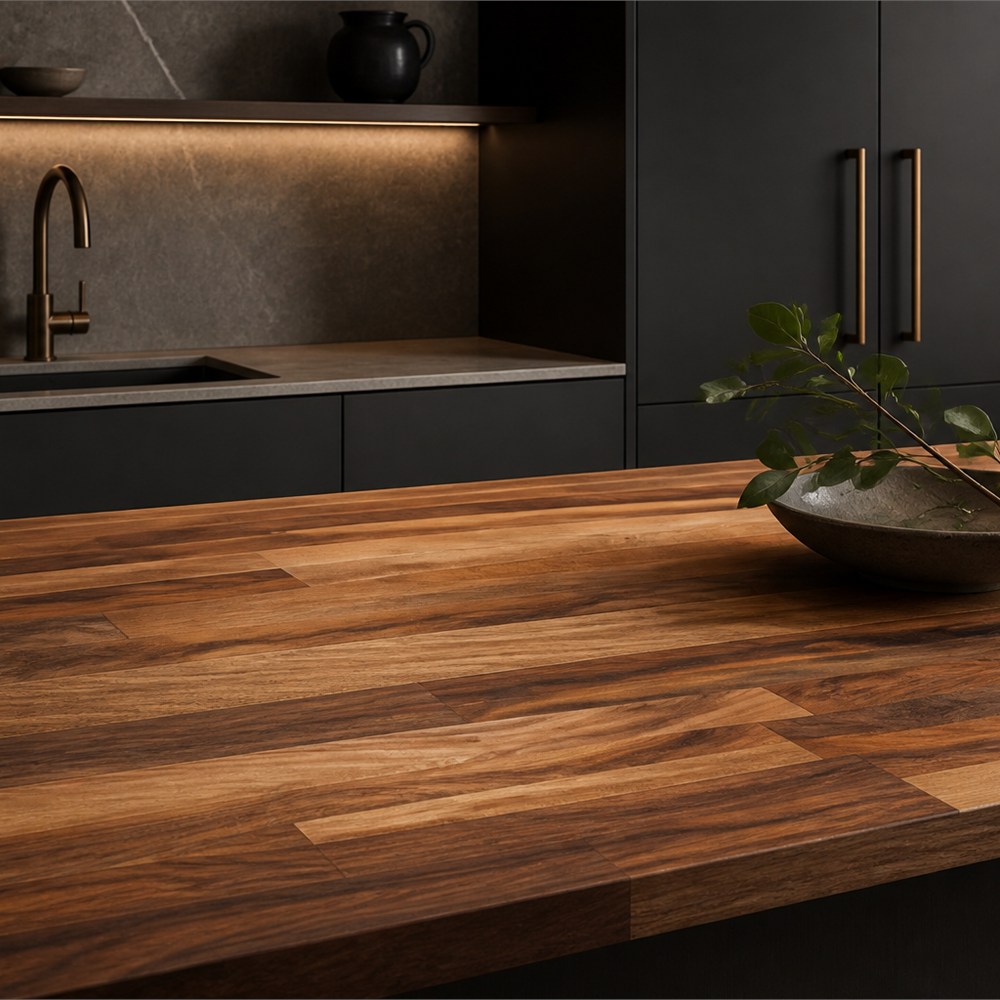
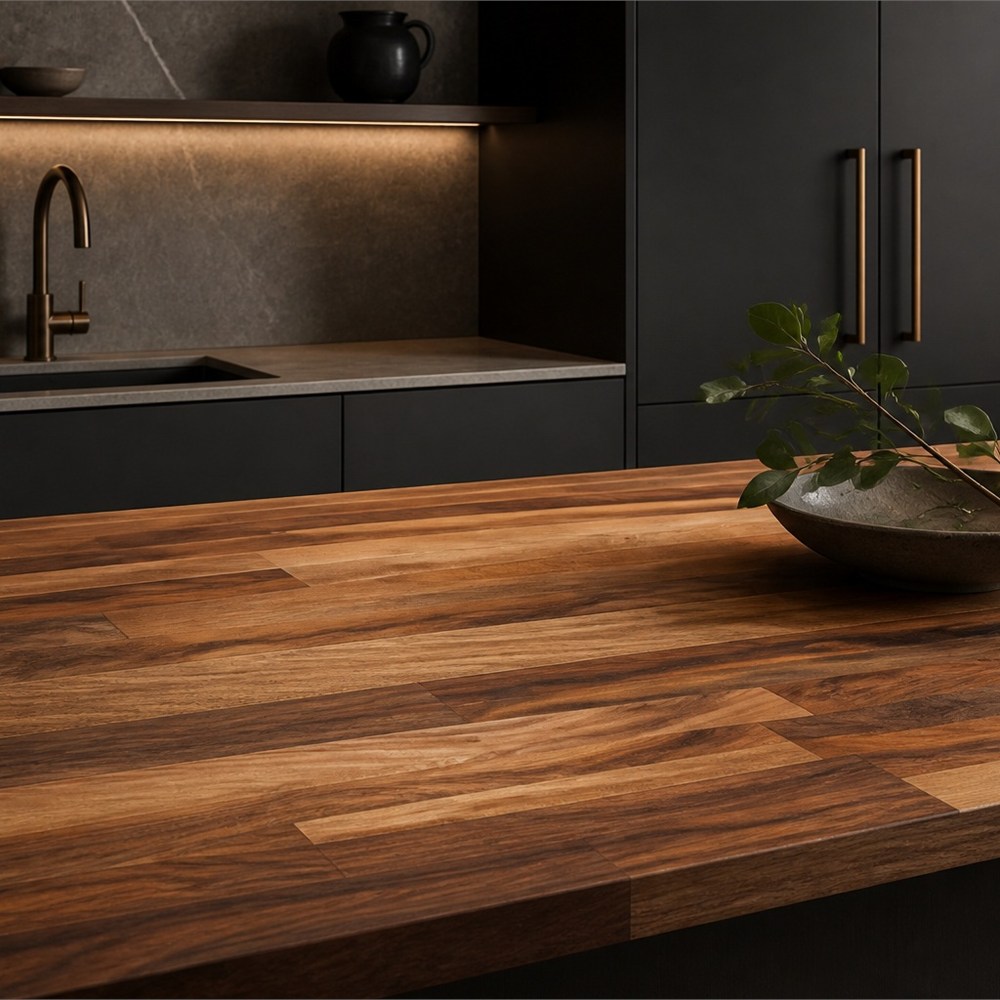
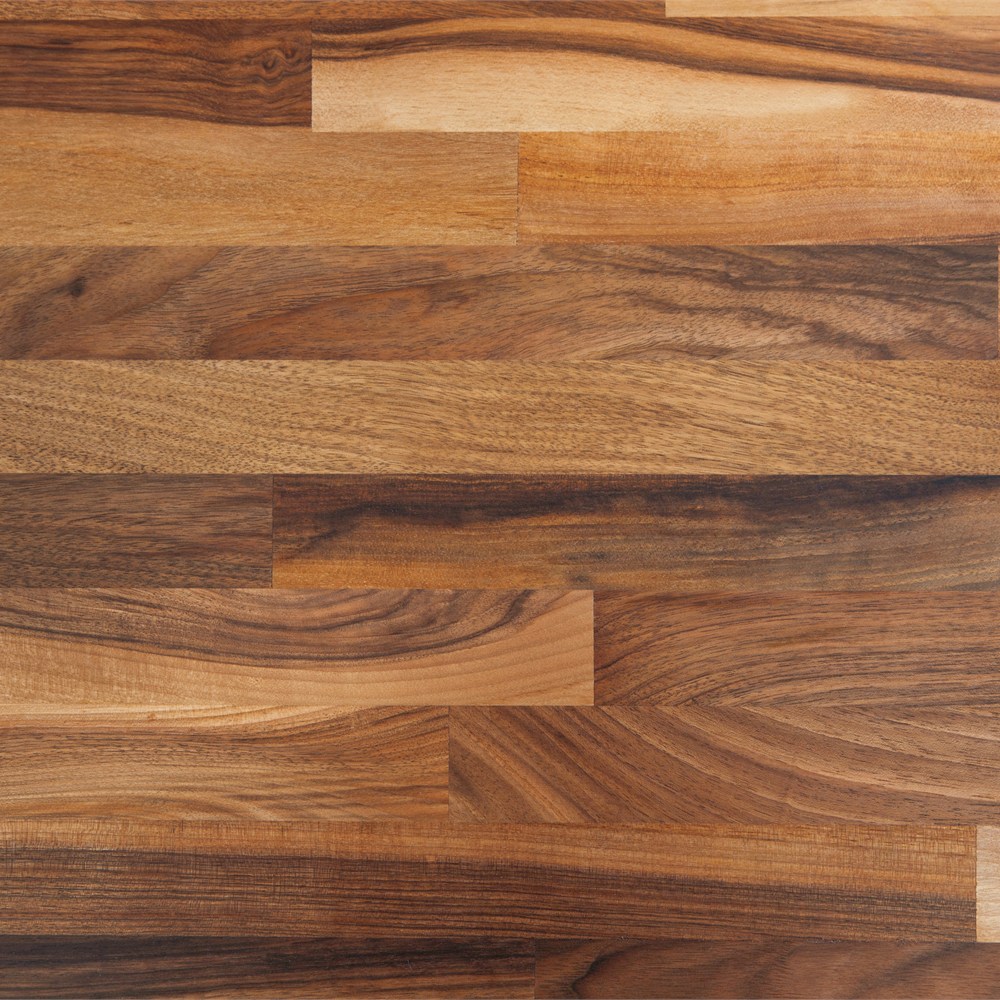
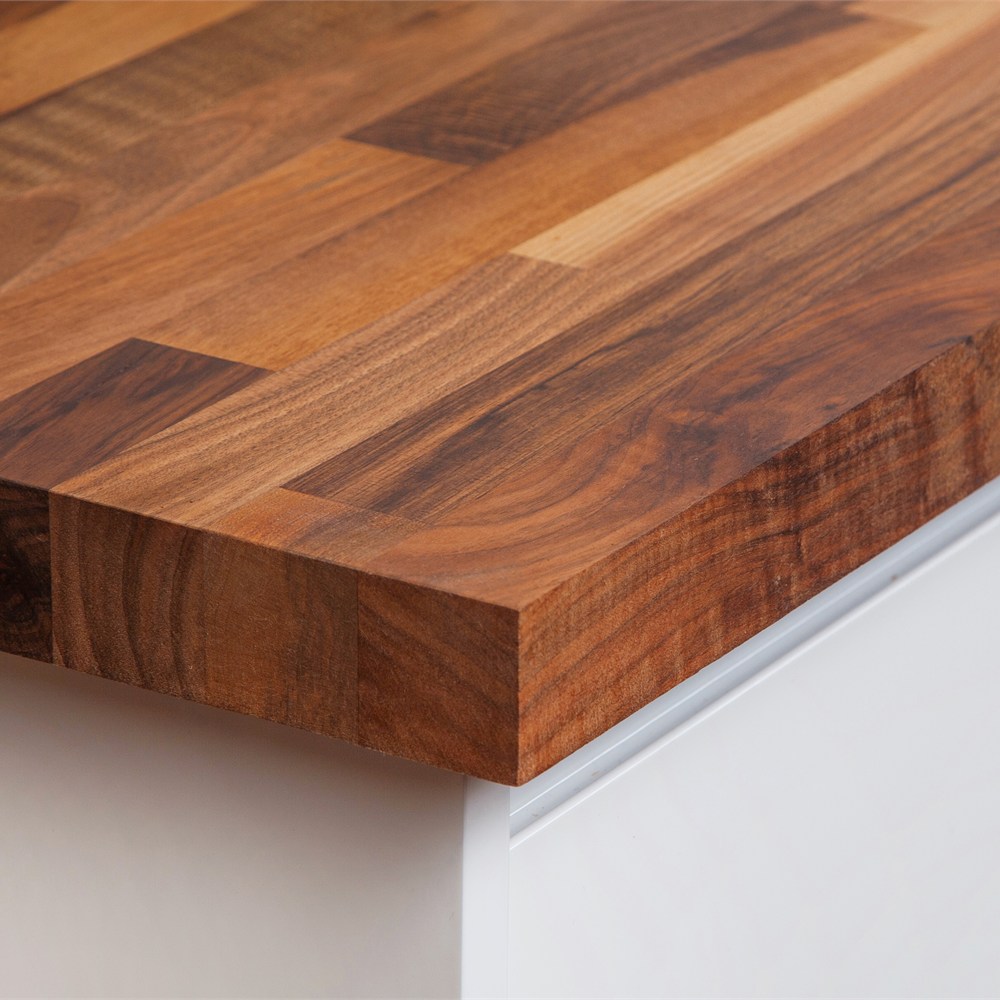
De Terra walnut worktops are built from solid European walnut staves - deep chocolate hearts, caramel swirls and the kind of natural drama that made walnut the furniture timber of grand houses. Ours is priced below every major UK worktop specialist, size for size.
These worktops arrive sanded and unoiled. They must be oiled before they go in - every face, every cut edge and the underside, because a sealed edge is what keeps water out of the timber around a sink.
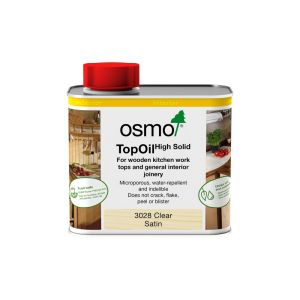
Allow two to three coats and one 500ml tin per 3m board, every face. Osmo TopOil from GBP 24. Full instructions: installation and aftercare guide.
Walnut is the timber people fall for on sight: chocolate browns flowing into caramel and smoke, no two staves alike, with a lustre under oil that stone and laminate simply do not have. European walnut runs slightly softer than oak - about 1,010 lbf Janka - which is the honest trade for its colour: use chopping boards, and it stays beautiful for decades of sand-and-refinish life.
The range runs 27mm and 40mm thicknesses at 635mm wide, lengths to 4m, plus 960mm-wide breakfast bars for islands and a matching upstand. Boards arrive sanded and un-oiled - the first oiling is walnut's party trick, turning the dry grey-brown surface into deep glowing chocolate.
Walnut's first oiling is a transformation
Unoiled walnut hides its colour. Two to three coats of food-safe oil wake the full chocolate depth and the caramel figure - oil every face, edge and cut-out before the board is fitted.
| Material | Solid European walnut (juglans regia), character grade with sap accents |
| Construction | Solid staves - 40mm nominal width (38-42mm range) |
| Hardness | Janka approx. 1,010 lbf (4,500 N) - use boards, keep the beauty |
| Thickness | 27mm and 40mm |
| Edge Profile | Square edge |
| Surface | Sanded to 120 grit - supplied un-oiled |
| Widths | 635mm worktops - 960mm breakfast bars |
| Weight | 3.5 kg to 76.2 kg per board |
| Brand | De Terra |
| Delivery | GBP 30 two-man delivery to mainland UK, or free Click & Collect from Burnley |
2-3 coats of food-safe worktop oil before installation, every face and edge. Watch the first coat go on - the transformation from dry board to deep chocolate is why people choose walnut.
Walnut marks more easily than oak, so knife discipline is the one rule that matters: cut on boards, not the worktop, and it keeps its lustre for years between refreshes.
Well-oiled walnut sheds water like any timber - wipe standing water and keep sink surrounds topped up. Its darkness hides water spotting better than pale timbers.
Unusually, walnut lightens slightly in strong sun rather than darkening. Occasional UV-filter hard-wax oil keeps the chocolate deep in sun-trap kitchens.
Scratches and wear sand out and re-oil invisibly - the flowing grain swallows repairs. A decade-old walnut top refinishes to showroom condition in an afternoon.
Storage, oiling, expansion gaps, fixings, cut-outs, joints and everyday care, step by step: read the installation and aftercare guide.
No - it is softer than oak (about 1,010 vs 1,360 lbf Janka), which in practice means one habit: use chopping boards. Millions of walnut kitchens prove the point, and any marks that do arrive sand out completely.
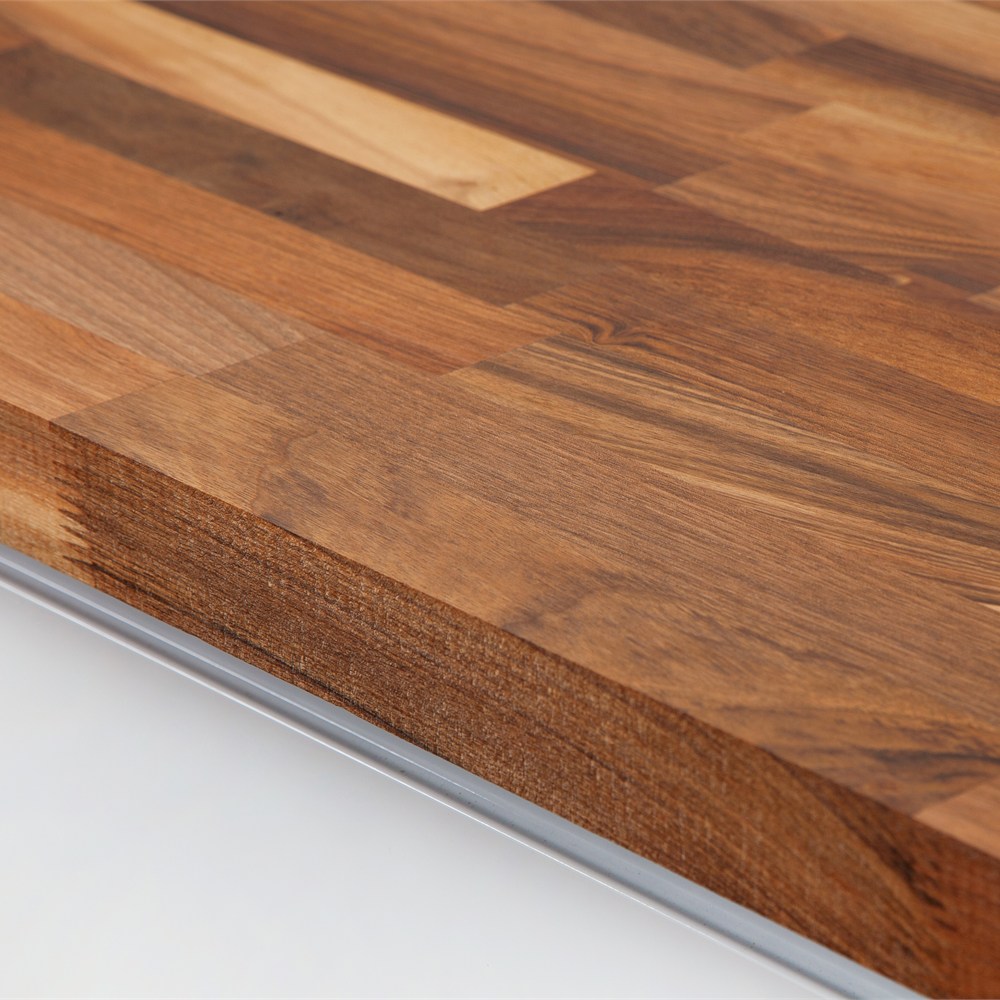
European walnut hearts run chocolate to espresso with lighter caramel sapwood accents - real boards carry the full gradient. It oils darker and richer than it arrives; our grain swatch photo shows the oiled tone.
Navy, deep green, sage and cream shakers are the classic partners, with brass or copper hardware. Against white handleless units walnut provides the warmth the scheme otherwise lacks.
2-3 coats of clear food-safe oil before fitting, then re-oil work areas when water stops beading - every 3-6 months at first, then twice a year. Clear oil only; walnut needs no tint.
Yes - walnut machines beautifully with standard tools, cleaner than oak in fact. Oil every fresh cut edge twice, especially around sink cut-outs.
Walnut is natural warmth - browns that flow and vary. Black oak is designed drama - near-black with uniform depth. Choose walnut when the kitchen should feel warm, black oak when it should feel sharp.