

Need Help?
Call an heating expert on 01282 429061

 PayPal Spread The CostKlarna, Clearpay or PayPal
 Free DeliveryOrders Over £500Excludes boilers and worktops
 Price Match PromiseWe won't be beaten on price
Need Help?
Call an heating expert on 01282 429061
| Wood Species | Prime Oak |
|---|---|
| Stave Construction | Standard Stave |
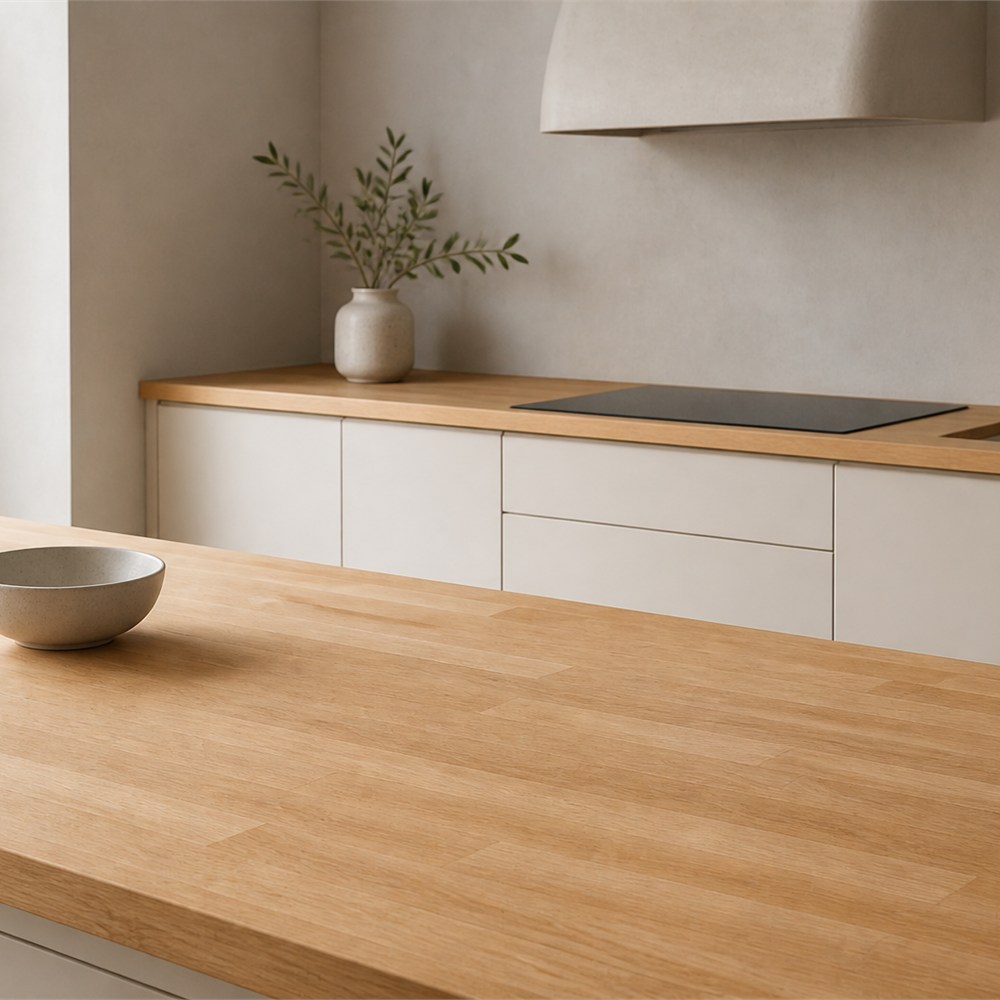
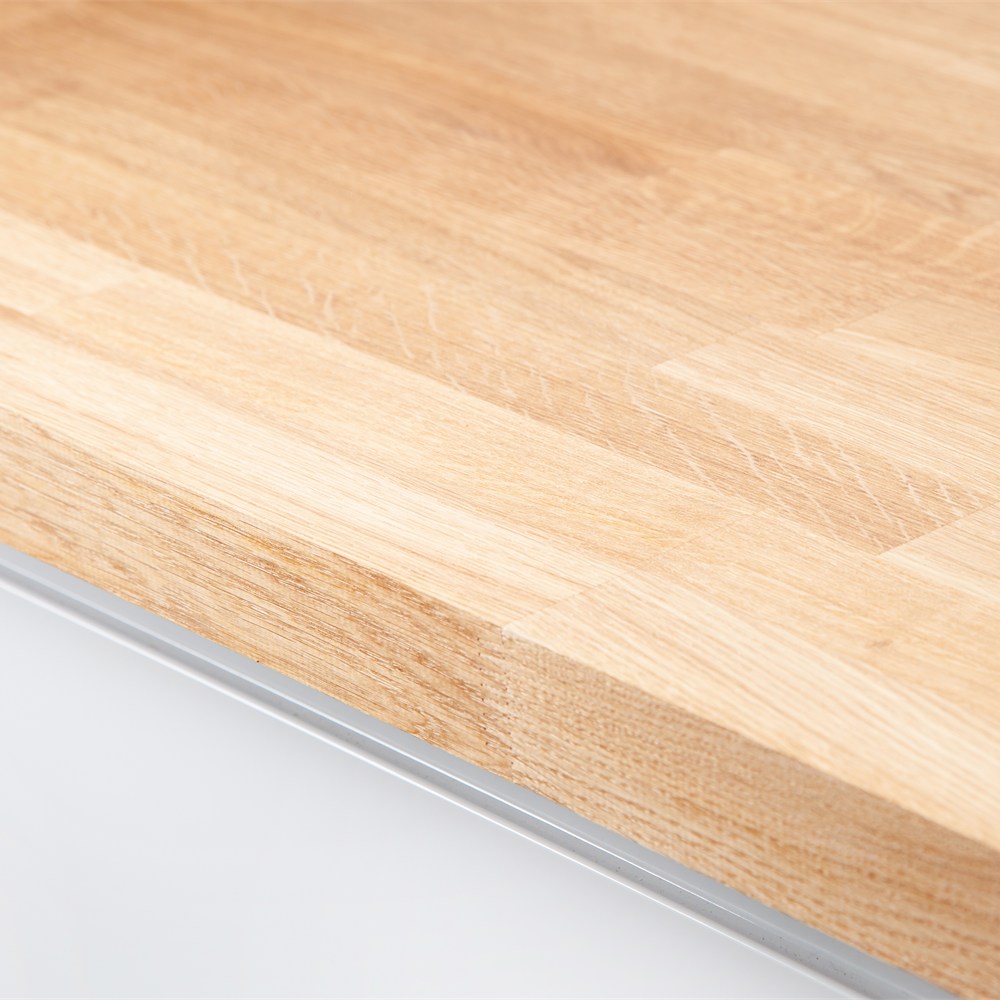
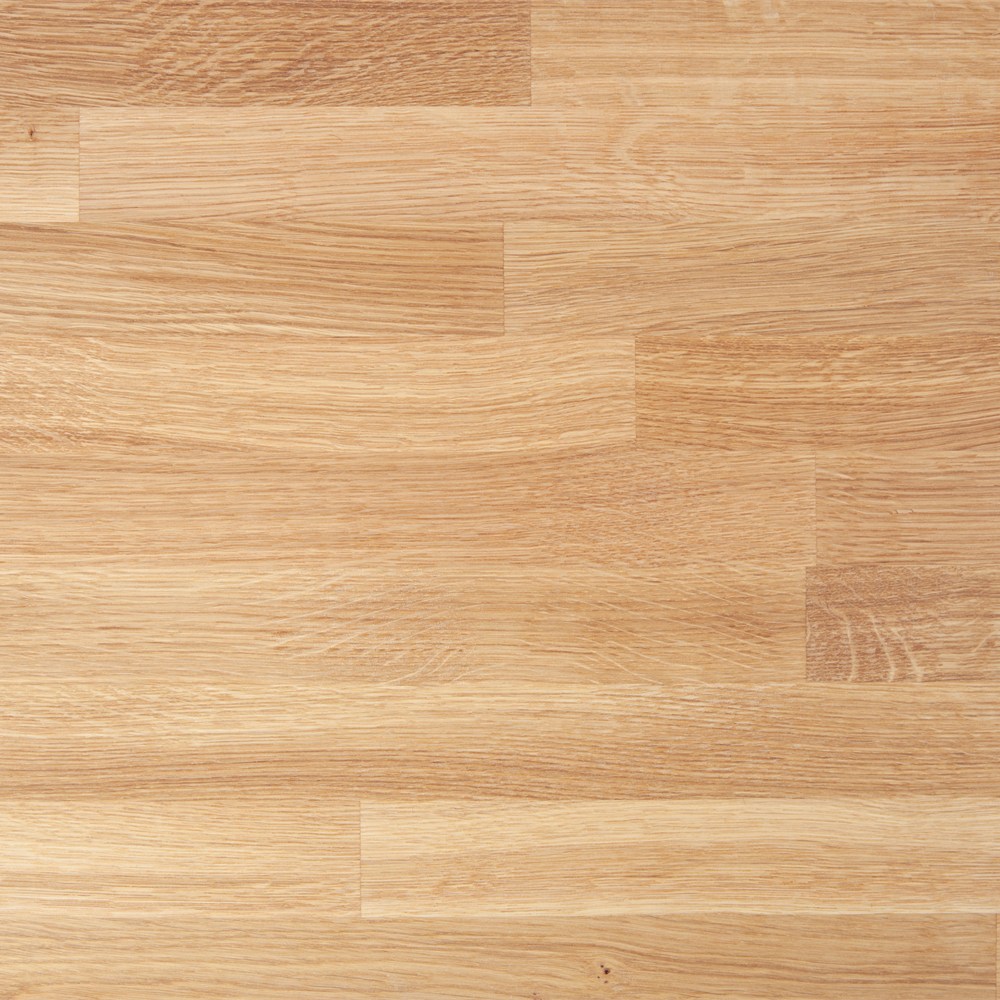
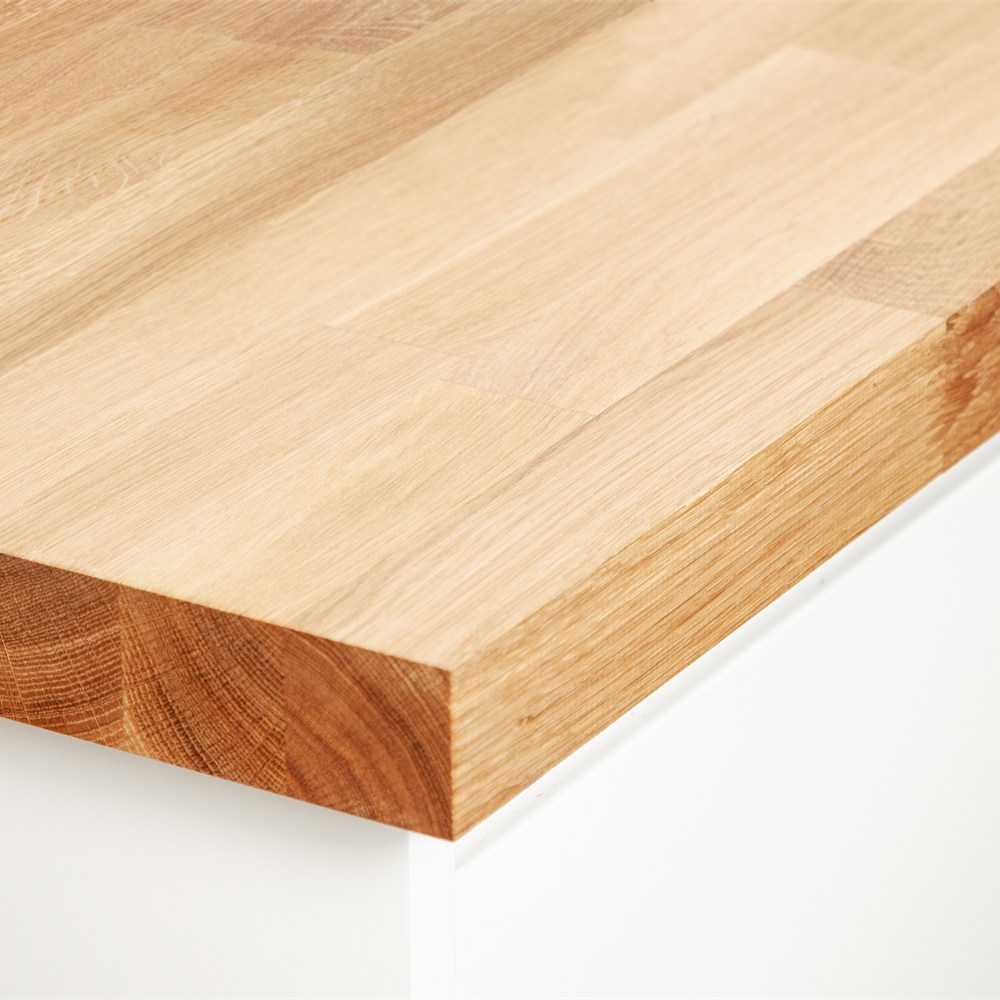
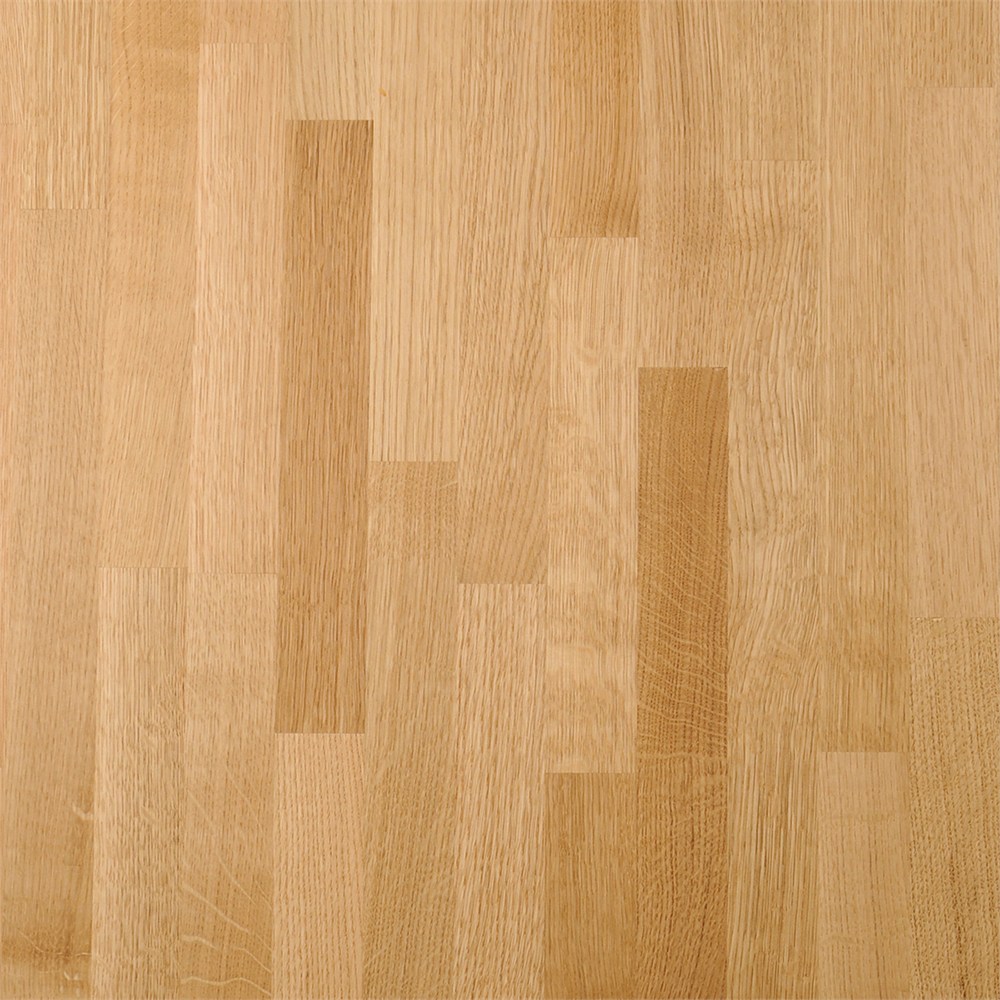
De Terra prime oak is cut from select-grade European oak: minimal knots, consistent golden colour and a calmer, more uniform grain than standard oak. The choice for kitchens where the worktop should whisper quality rather than shout character.
These worktops arrive sanded and unoiled. They must be oiled before they go in - every face, every cut edge and the underside, because a sealed edge is what keeps water out of the timber around a sink.
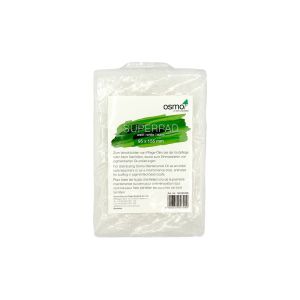
Allow two to three coats of oil on an unoiled board. The pre-oiled sizes in this range carry one factory coat and still need one to two more once fitted. Choosing a tinted finish? Order unoiled - pigment will not take evenly on a part-sealed surface. Osmo TopOil from GBP 24. Full instructions: installation and aftercare guide.
Prime grade means the boards are cut from the cleanest oak the tree gives: knots are rare and small, sapwood is excluded, and the colour runs consistent gold from one end of a 4-metre board to the other. The same Janka hardness as standard oak - about 1,360 lbf - with a quieter, furniture-grade surface that suits precise, minimal kitchens.
The range runs 40mm thickness in widths of 635mm and 720mm, lengths to 4m, plus 960mm-wide breakfast bars for islands and a matching upstand. Boards come sanded and un-oiled, with factory pre-oiled options on selected sizes - the pre-oiled option arrives with its first coats already done, ready to fit sooner.
Unoiled or pre-oiled - your call
Choose unoiled to apply your preferred finish, or pre-oiled to save a day of finishing work. Pre-oiled boards still need every cut edge oiled on site and a top-up coat after installation.
| Material | Select (prime) grade solid European oak, sapwood-free |
| Construction | Solid staves - 40mm nominal width (38-42mm range) |
| Hardness | Janka approx. 1,360 lbf (6,000 N) - identical to standard oak |
| Thickness | 40mm |
| Edge Profile | Square edge |
| Surface | Sanded to 120 grit - supplied un-oiled, with factory pre-oiled options on selected sizes |
| Widths | 635mm and 720mm worktops - 960mm breakfast bars |
| Weight | 3.5 kg to 86.4 kg per board |
| Brand | De Terra |
| Delivery | GBP 30 two-man delivery to mainland UK, or free Click & Collect from Burnley |
Treat exactly like standard oak: 2-3 coats of food-safe worktop oil on every face and edge before fitting. Prime oak's tight surface takes oil evenly - expect a rich satin glow rather than a patchy first coat.
Factory oiling covers the faces, but every cut you make on site exposes raw timber - oil each cut edge and cut-out twice. Add one full top-up coat after installation, then follow the normal cycle.
Re-oil work areas when water stops beading - typically every 3-6 months early on, then twice yearly. A uniform grade shows neglect more clearly than character oak, so keep the cycle honest.
Trivets for pans, boards for knives. Prime oak sands back beautifully, but prevention keeps the uniform surface uniform.
Like all solid De Terra timber, prime oak sands and re-oils back to new. Its consistency means repairs blend invisibly - there is no grain chaos to match.
Storage, oiling, expansion gaps, fixings, cut-outs, joints and everyday care, step by step: read the installation and aftercare guide.
Timber is graded by appearance. Prime (select) grade takes the cleanest boards from the oak: rare small knots, no sapwood, consistent colour. Character or rustic grades embrace knots and variation. The strength and hardness are the same - you are choosing a look.
If your kitchen design is minimal, handleless or built around long clean runs, yes - the uniform grain is exactly what those designs want. In a busy farmhouse kitchen full of texture, standard or rustic oak gives more character for less money.
Pre-oiled saves roughly a day: the factory applies the first coats evenly before delivery. You still oil cut edges on site and give one top-up coat after fitting. Unoiled costs less and lets you pick the exact oil and sheen you want.
Oil the whole surface, not just work zones, so the colour deepens evenly - and use boards and trivets religiously. Localised wear shows more on a uniform grade, though it also sands out invisibly when needed.
Yes - it machines identically to standard oak with standard tools. Cut-outs for sinks and hobs are routine; oil every fresh edge twice before installation.
No. Prime refers to the timber grade (cleanliness of grain); full stave refers to construction (each stave running the full board length). De Terra prime oak uses 40mm staves in select-grade timber - the premium grade in our standard construction.