


Need Help?
Call an heating expert on 01282 429061

 PayPal Spread The CostKlarna, Clearpay or PayPal
 Free DeliveryOrders Over £500Excludes boilers and worktops
 Price Match PromiseWe won't be beaten on price
| Wood Species | Oak |
|---|---|
| Stave Construction | Standard Stave |
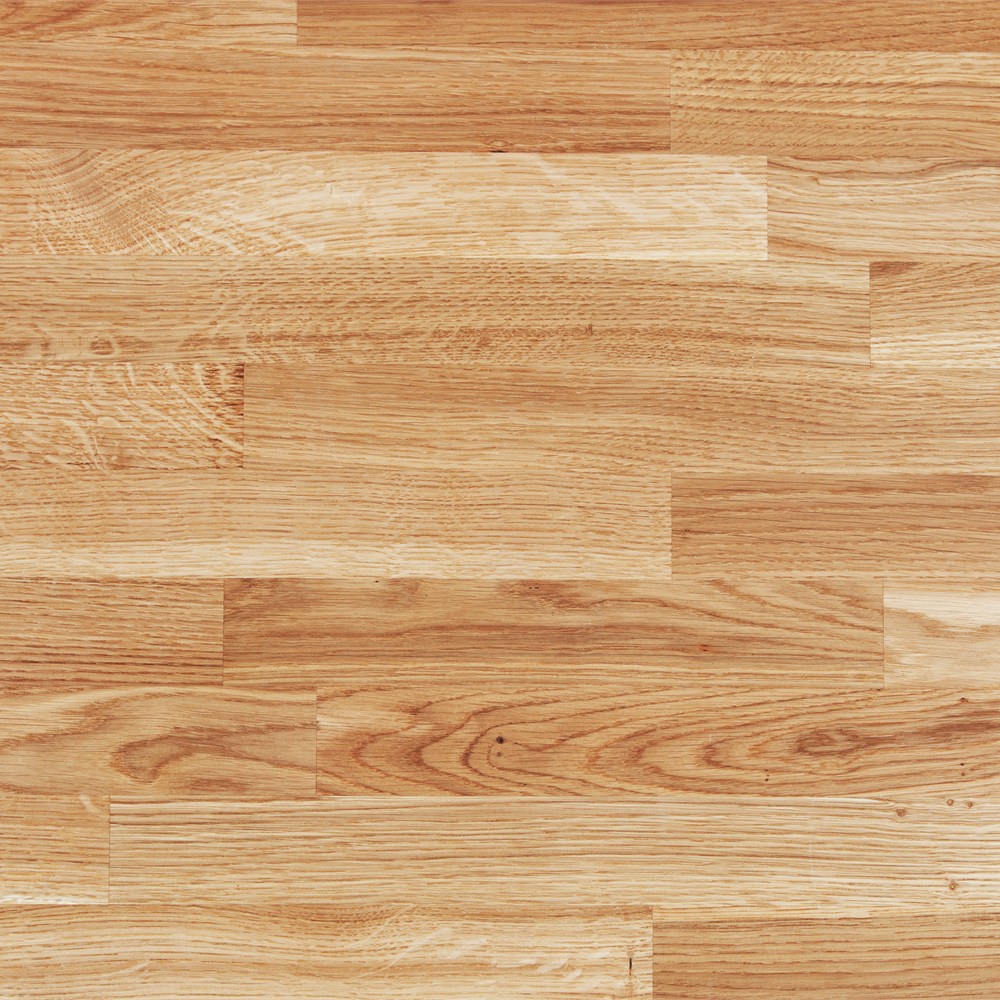
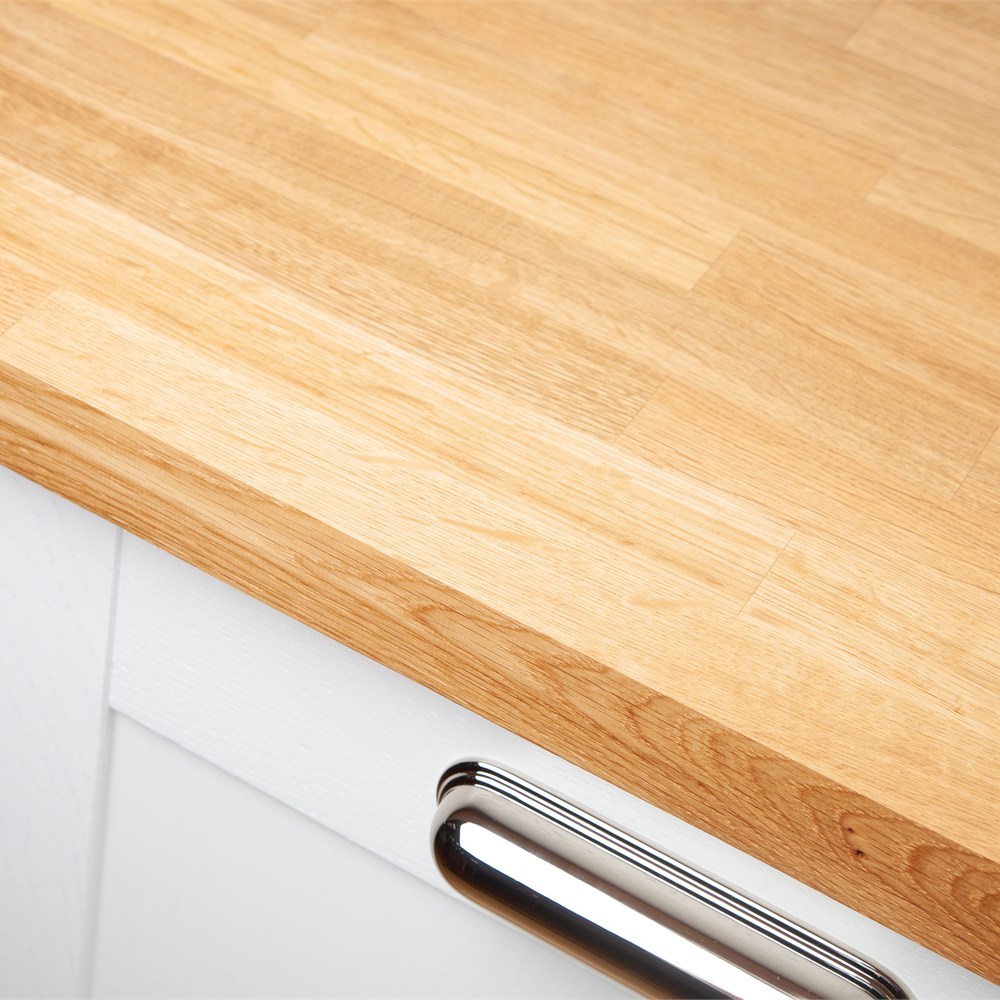
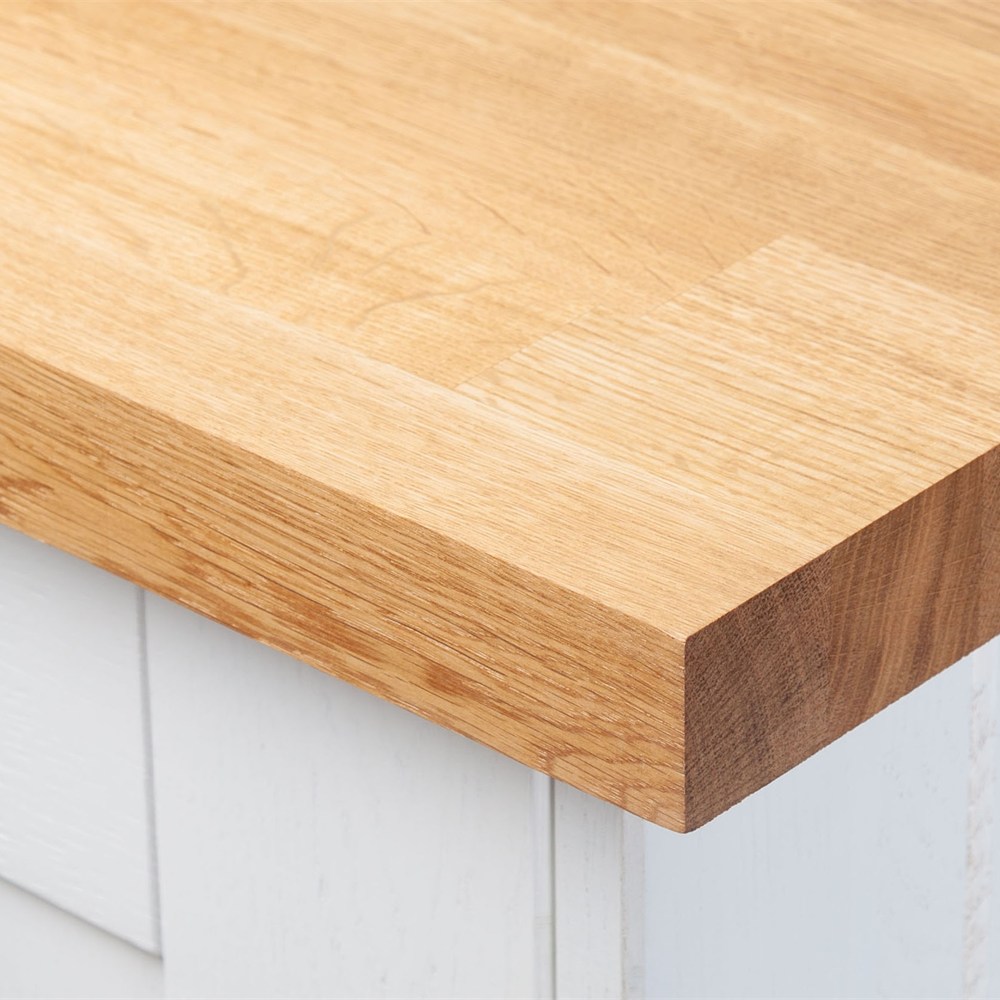
De Terra oak worktops are built from solid European oak staves - golden tones, bold open grain and the hard-wearing surface that has made oak the benchmark kitchen timber for a century. Sanded ready to oil, in more sizes and thicknesses than any other range we stock.
These worktops arrive sanded and unoiled. They must be oiled before they go in - every face, every cut edge and the underside, because a sealed edge is what keeps water out of the timber around a sink.
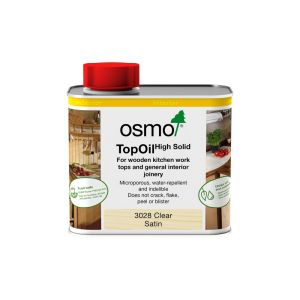
Allow two to three coats of oil on an unoiled board. The pre-oiled sizes in this range carry one factory coat and still need one to two more once fitted. Choosing a tinted finish? Order unoiled - pigment will not take evenly on a part-sealed surface. Osmo TopOil from GBP 24. Full instructions: installation and aftercare guide.
Oak has earned its place as the default choice for solid wood kitchens: a golden, honey-warming tone, a bold open grain that reads unmistakably as real timber, and a Janka hardness of roughly 1,360 lbf that shrugs off daily knocks. Each De Terra board is built from selected 40mm European oak staves - not veneer, not foil-wrapped chipboard - so the character runs the full thickness and the surface can be sanded and re-oiled back to new for decades.
This is our deepest range: 22mm, 27mm and 40mm thicknesses across widths of 635mm and 720mm, with lengths to 4m, plus 960mm-wide breakfast bars for islands and a matching upstand. Choose the slim 22mm profile for a contemporary line, classic 27mm, or the full 40mm slab look - every board sanded and supplied un-oiled, with factory pre-oiled options on selected sizes.
Pick your thickness, then oil every face
22mm suits modern handleless kitchens, 27mm is the traditional all-rounder, 40mm gives the chunky statement look. Whichever you choose, apply 2-3 coats of food-safe worktop oil to every face, edge and cut-out before fitting.
| Material | Solid European oak (FSC-certified sustainable forests) |
| Construction | Solid staves - 40mm nominal width (38-42mm range) |
| Hardness | Janka approx. 1,360 lbf (6,000 N) - the kitchen hardwood benchmark |
| Thickness | 22mm, 27mm and 40mm |
| Edge Profile | Square edge |
| Surface | Sanded to 120 grit - supplied un-oiled, with factory pre-oiled options on selected sizes |
| Widths | 635mm and 720mm worktops - 960mm breakfast bars |
| Weight | 21 kg to 86.4 kg per board |
| Brand | De Terra |
| Delivery | GBP 30 two-man delivery to mainland UK, or free Click & Collect from Burnley |
Apply 2-3 coats of food-safe worktop oil (Danish or hard-wax oil) to every face, edge and cut-out - including the underside - before the board is fitted. Un-oiled oak must never be plumbed in bare.
Re-oil the working areas every 3-6 months in the first year, then roughly twice a year. If a splash of water stops beading and starts soaking in, the oak is telling you it is time.
Wipe standing water promptly and keep the tap area well oiled - the end grain around cut-outs drinks moisture fastest. A well-oiled oak draining area copes fine with daily use.
Always use a trivet - hot pans scorch any timber - and a chopping board: oak is hard, but knives cut oil film first and timber second.
Black marks, ring stains and scratches sand out of solid oak completely. A worn 10-year-old oak top can be sanded and re-oiled to showroom condition in an afternoon - laminate offers no such second life.
Storage, oiling, expansion gaps, fixings, cut-outs, joints and everyday care, step by step: read the installation and aftercare guide.
Two to three coats of food-safe worktop oil before installation, covering every face, edge and cut-out. Let each coat soak in and wipe off the excess. After fitting, re-oil the work areas every three to six months in the first year.
Black rings are usually water reaching the tannins in the oak. Sand the mark back with 120-grit then 180-grit paper until the stain lifts, then re-oil the area with two coats. For deep marks a dedicated oak stain remover (oxalic acid) helps before sanding.
40mm is the classic solid-slab look with maximum stiffness for long spans and islands. 27mm suits most traditional kitchens and costs less. 22mm gives a sharp contemporary line on handleless units. All three are the same solid European oak staves.
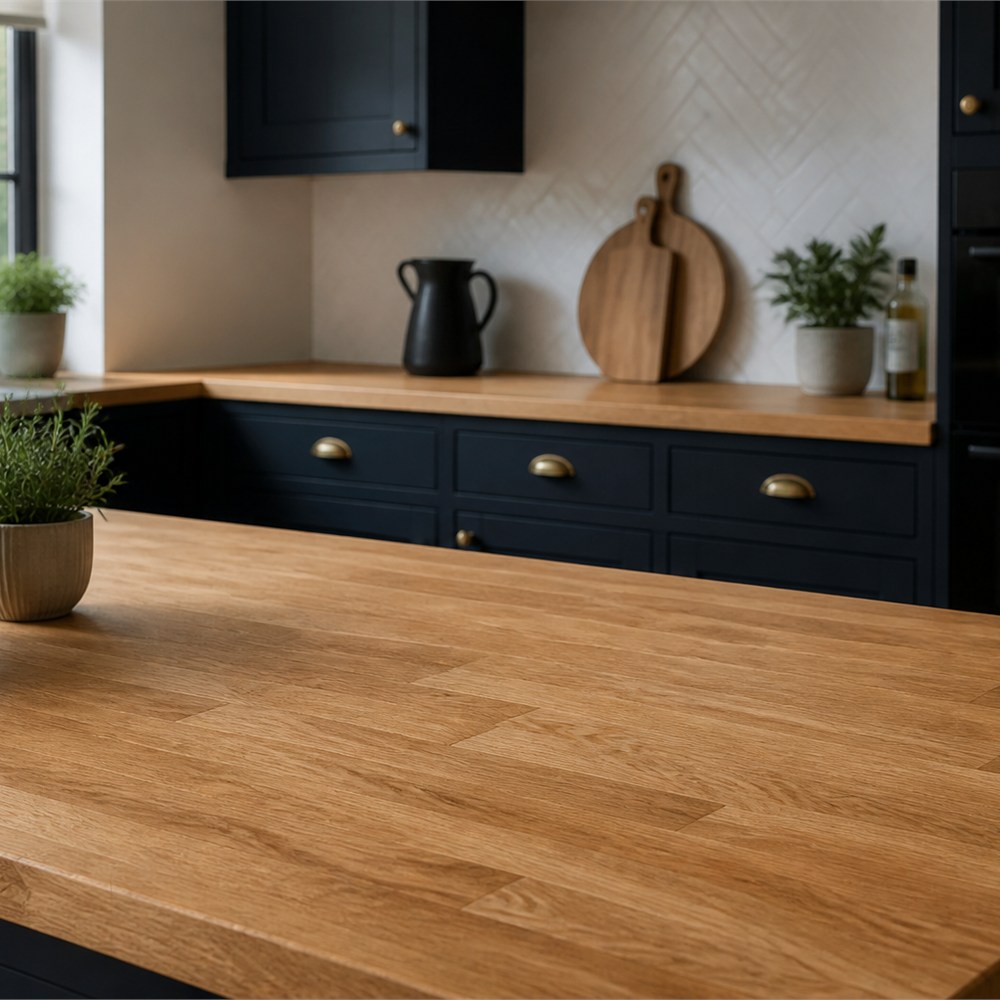
Oak is the most forgiving worktop timber for colour pairing: white and cream gloss, navy and sage shaker, and grey handleless kitchens all work. Its golden tone warms cool colours and matches painted farmhouse styles naturally.
Solid European oak, full thickness. The boards are built from 40mm-wide solid staves bonded for stability - there is no chipboard core and no veneer skin, so the surface can be sanded and re-finished repeatedly for decades.
Yes - oak works cleanly with standard woodworking tools, and sink or hob cut-outs are routine for any competent fitter. Oil every fresh cut edge with two coats before the board goes in, especially around the sink.
Oak is harder, lighter in colour and lower in price; walnut is darker, more dramatic and slightly softer. If you want a bright kitchen that hides wear, choose oak. If you want deep chocolate luxury and will use chopping boards religiously, walnut rewards you.